
Social Impact BondSOCIAL IMPACT BOND
Creating new businesses through public-private partnerships
A Social Impact Bond (SIB) is a new public-private partnership mechanism that seeks to solve social issues faced by national and local governments by implementing new solutions that utilize the know-how of private companies and private-sector funds on a pay-for-success basis. As part of its Business Producing activities, DI will promote the use of SIBs in a wide range of fields, including medical care and health, infrastructure maintenance and repair, disaster prevention, recycling, children’s education, and urban development.
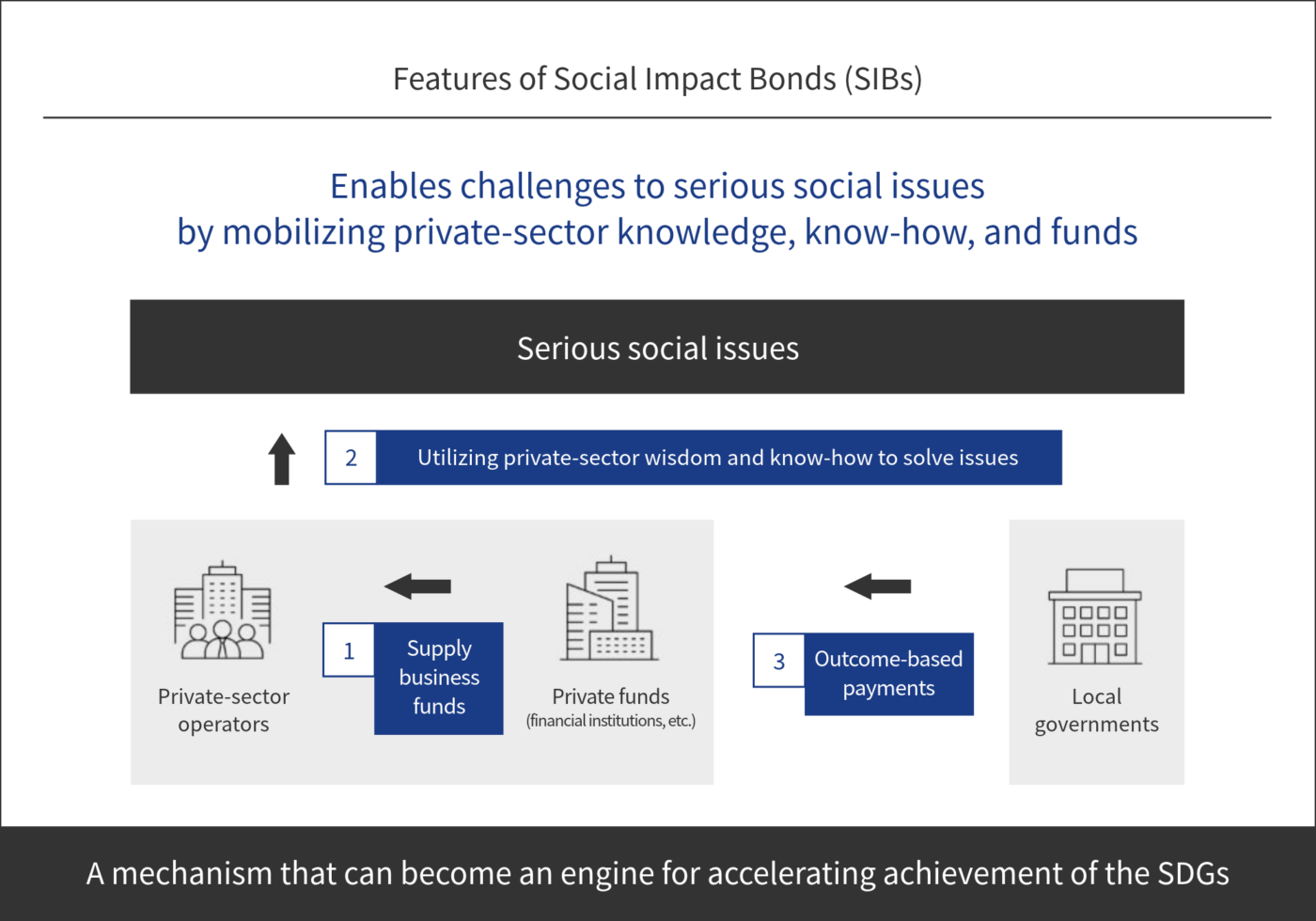
Why DI promotes Social Impact Bonds (SIBs)
Japan, which faces various social issues, clearly needs fundamental solutions. Many social issues cost more when addressed after they become apparent, while in many cases they can be contained at minimal cost if addressed in advance, through prevention. Even when governments understand the importance of addressing issues in advance, through prevention, there are structural difficulties in allocating funds and utilizing know-how for matters that have not yet become apparent. By incorporating private-sector ingenuity in terms of both funding and know-how, DI aims to help solve and contain various social issues in Japan and create a world that benefits all three parties: private companies, government, and citizens.
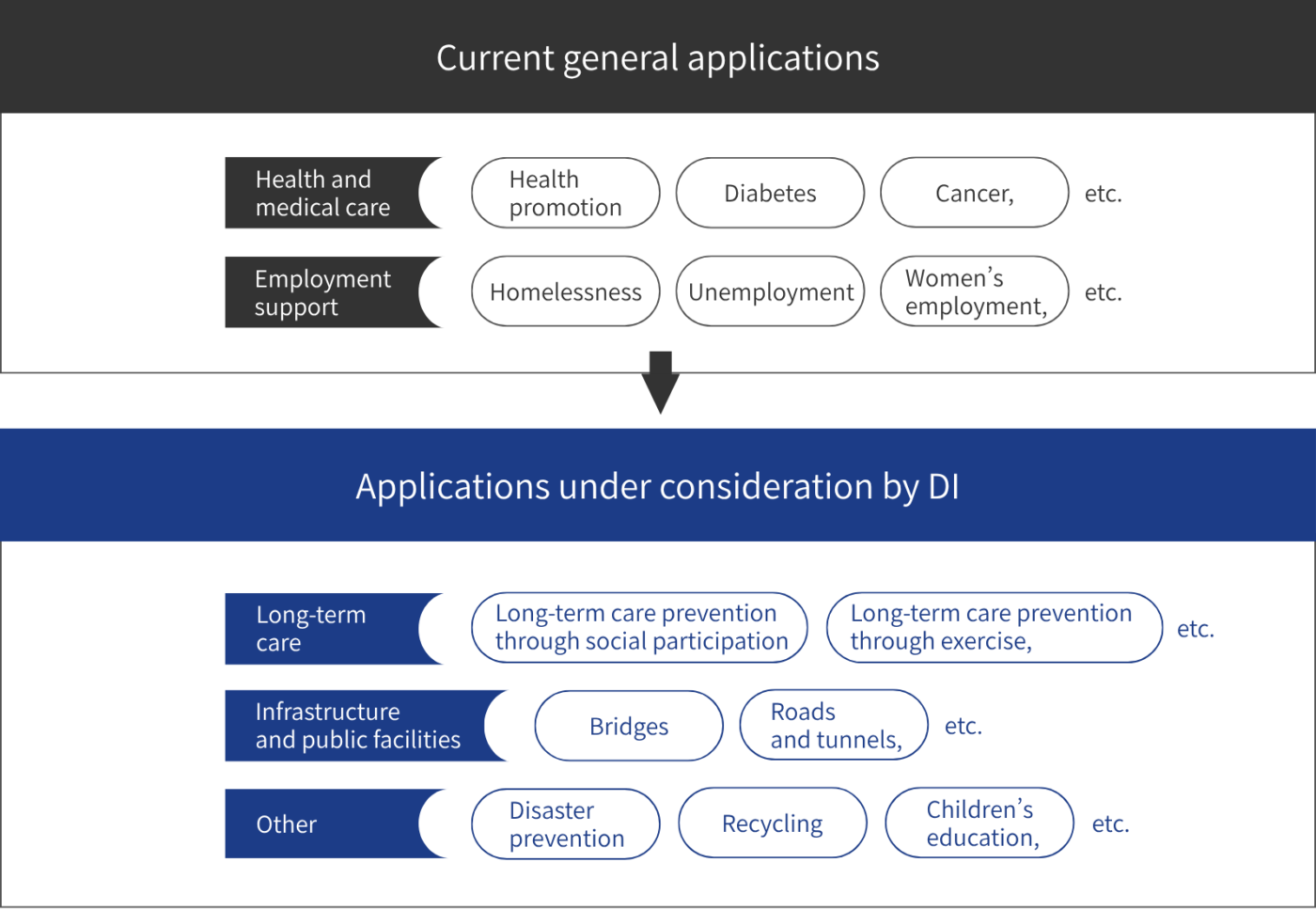
Social issues solved by Social Impact Bonds (SIBs)
Current general applications of SIBs tend to be initiatives that are completed in the short term, whose results are easy to evaluate, and whose impact is small. Considering the seriousness of Japan’s various social issues, DI believes SIBs should also be applied to fields where initiatives extend over the medium to long term and results are difficult to evaluate, but the impact is large.
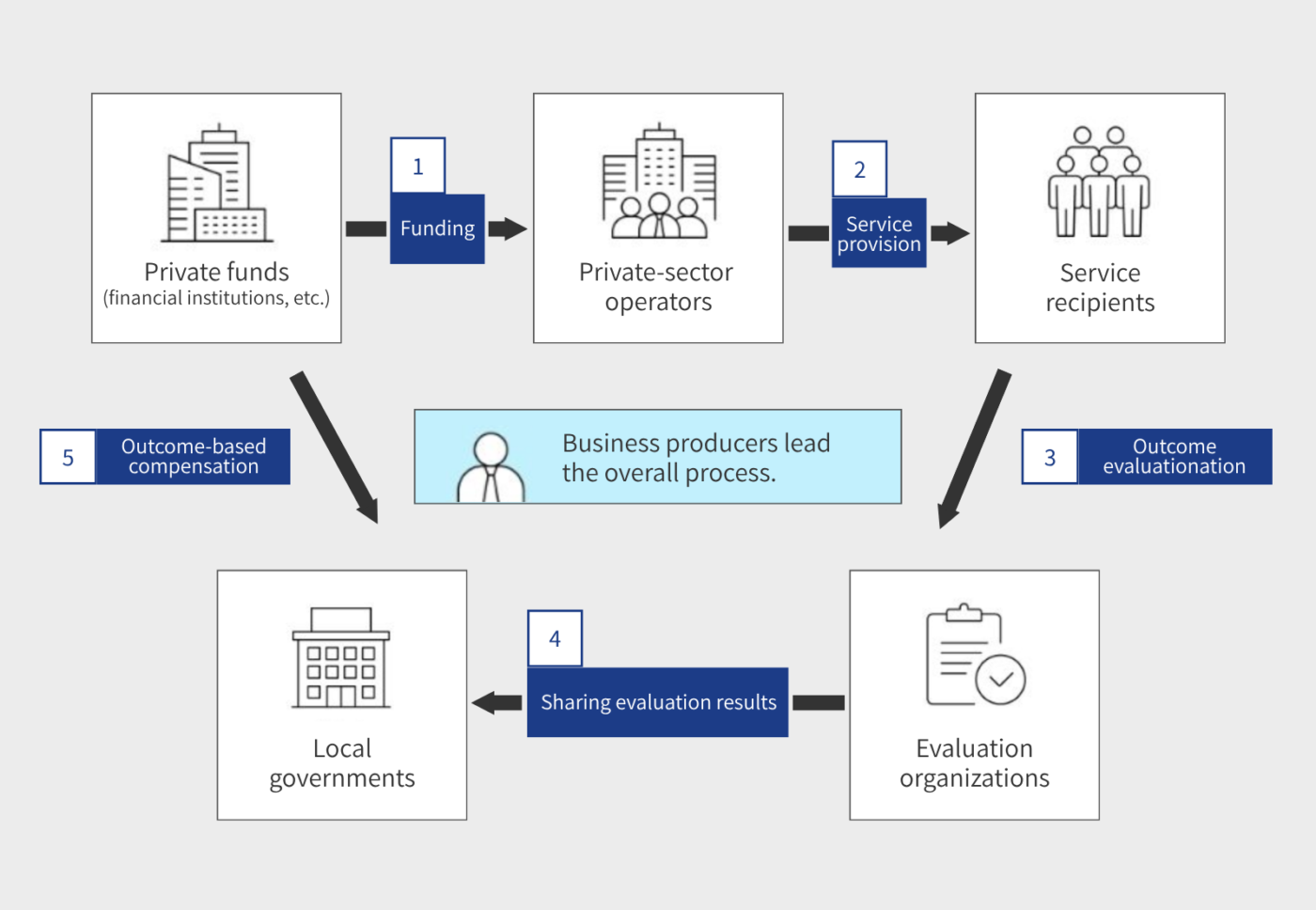
Structure of Social Impact Bonds (SIBs)
- Private funds provide business funds to operators.
- Operators provide services to service recipients. For long-term care prevention, the idea is to provide services that contribute to long-term care prevention, such as exercise, employment, and hobbies, to elderly people who are at risk of requiring long-term care.
- Evaluation organizations evaluate the results of the services provided by operators.
- The results are shared with local governments. In long-term care prevention, one result is that elderly people who would otherwise have become in need of long-term care five years later remain healthy, and this is evaluated by utilizing data and monitoring over time.
- Local governments pay outcome-based compensation from pooled funds.
What the “Next Rise Project” is:
This project aims to maintain and improve health and prevent the need for long-term care in the future. It is an initiative to enrich later life while reducing the burden on the next generation.